.jpg)
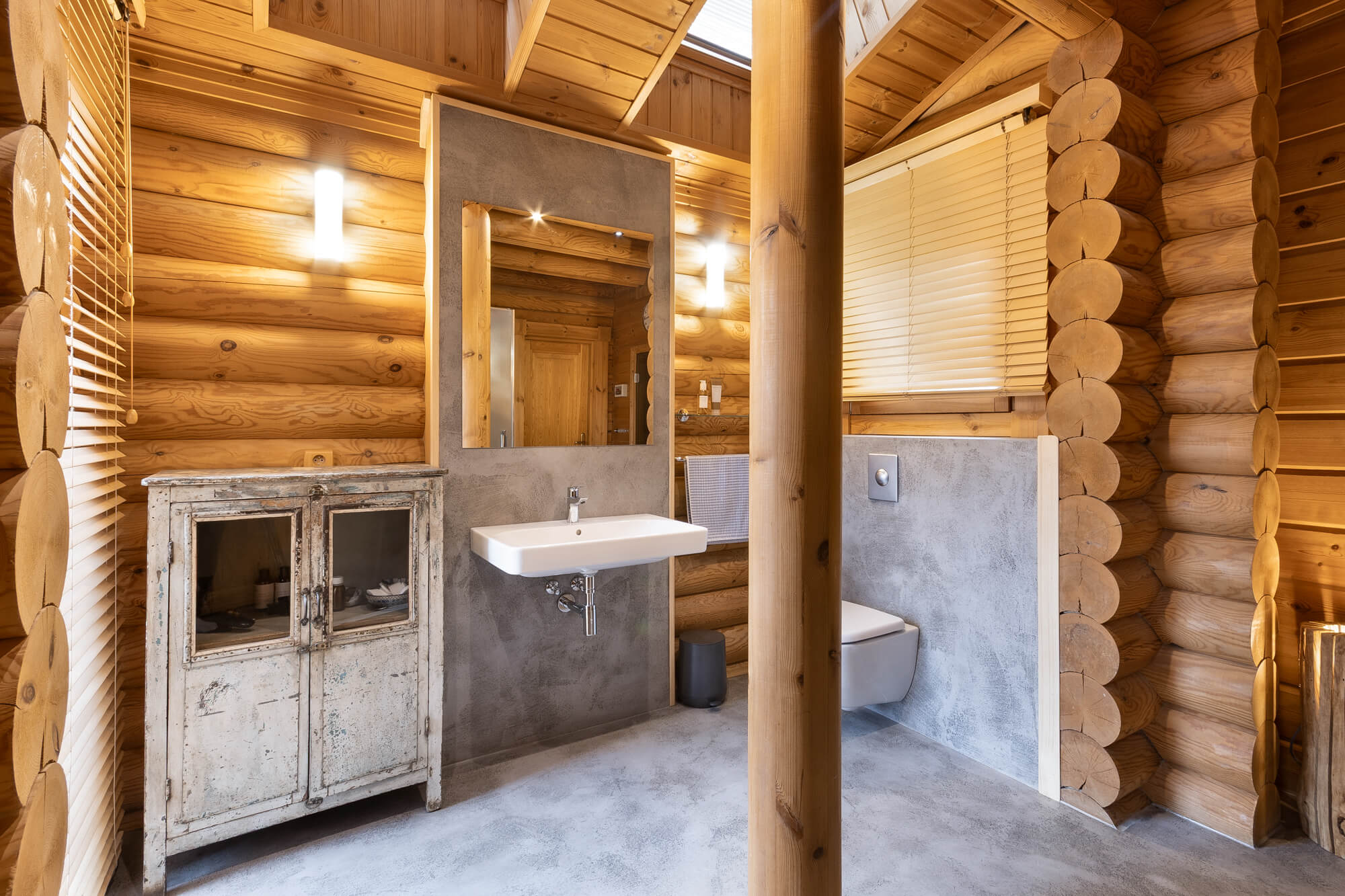
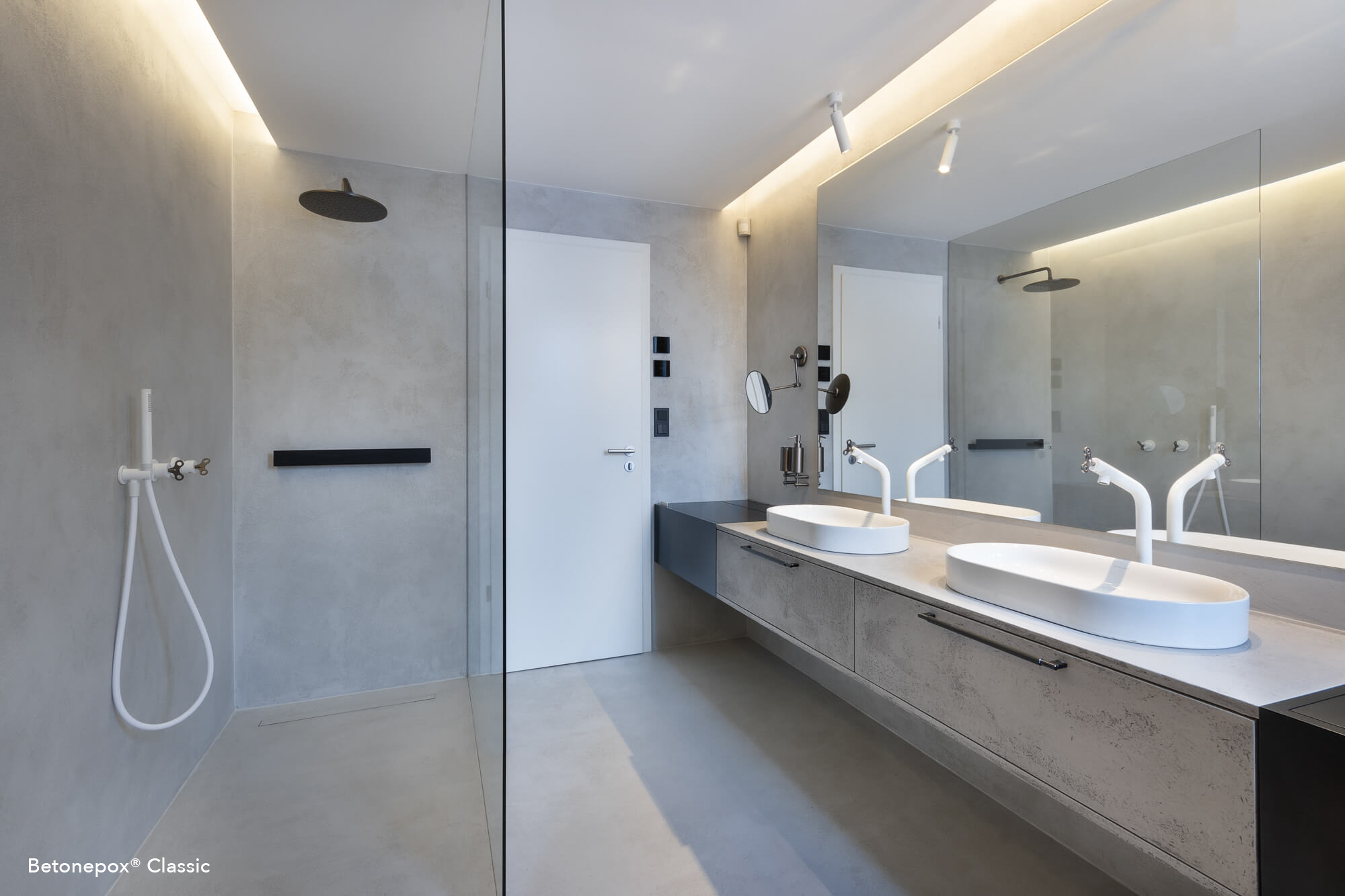
It looks like concrete, but it isn’t. Josef Němec had to develop his own finishes to recreate its appearance and give modern interiors their distinctive character. He experimented with different compositions and pigments, as well as ways of coaxing the material into behaving exactly as he needed it to. “We couldn’t get the epoxy finish smooth and polished. Then it occurred to me to spray it with water. Suddenly, we could smooth it to a mirror-like finish,” Němec recalls of developing Betonepox®, which he subsequently registered as a trademark. And that was far from his only innovation.
When you founded your own company thirty years ago, applying Venetian plaster and other surface finishes, what ambitions did you have?
I didn’t really have any grand ambitions at the time. We were expecting our first child, and looking back, it was quite a bold move. I remember going from one block of flats to another with my pregnant wife, leaving leaflets at the entrances offering painting, decorative finishes and wallpapering. I really wanted to run my own business, and I’ve always enjoyed working.
How important was the early collaboration with architects Jan Aulík and Jakub Fišer for the future of the company?
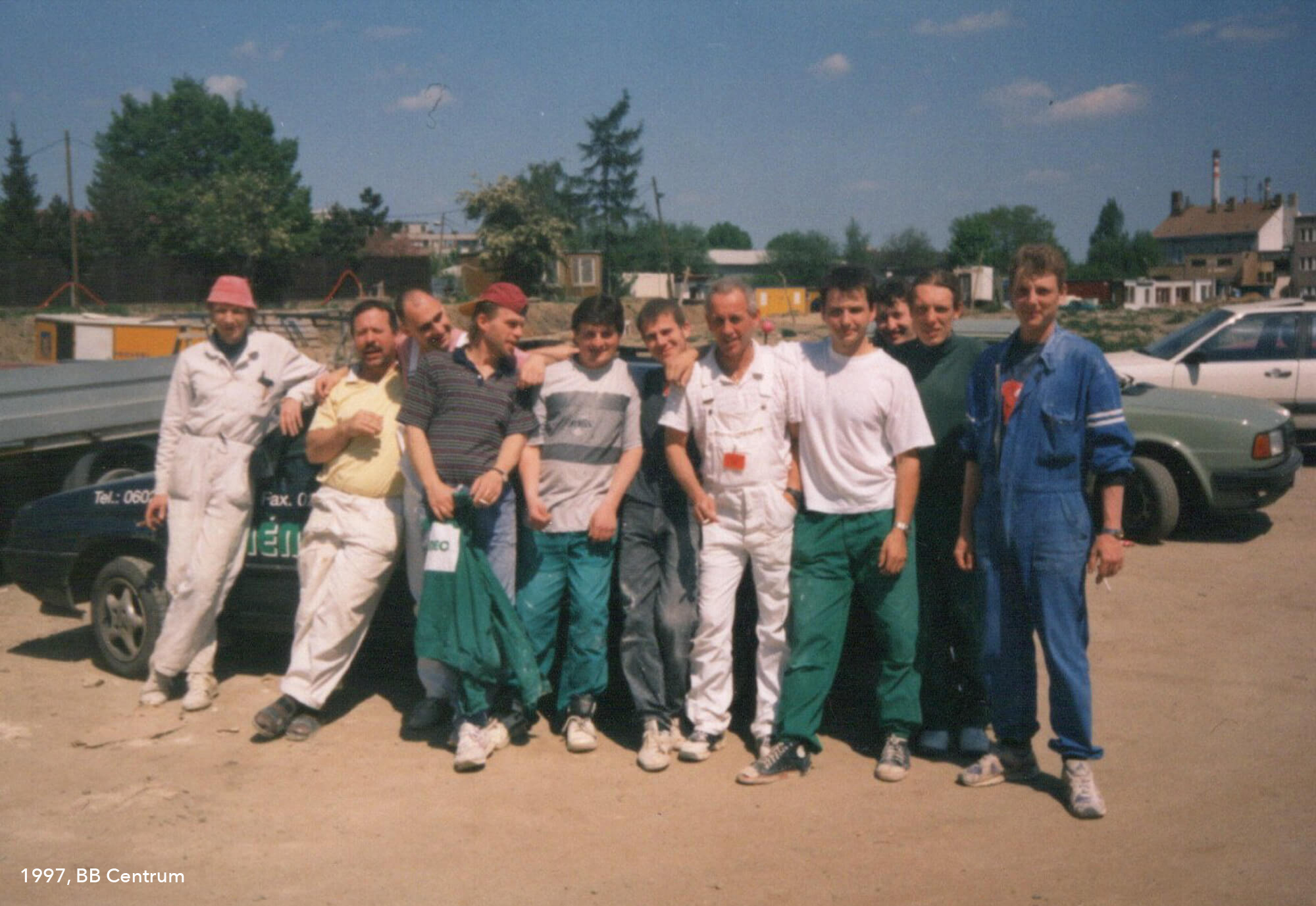
The collaboration actually came about by chance. I went to buy Venetian plaster from Domus Aurea, where I had previously worked. While I was there having a coffee, the phone rang. An architect was looking fora company experienced in Venetian plaster. They passed the call over to me, and that’s how it all started. We then applied around 1,400 square metres of Venetian plaster in Building C at the BB Centrum. I’ve worked with Jan Aulík on other projects ever since. Jakub Fišer wasn’t yet a co-owner of the firm at the time, but I was really impressed by how he managed a project of that scale.
Five years later, your collaboration with Aulík Fišer led to the development of a new finish, Imitace betonu®. Who came up with the idea?
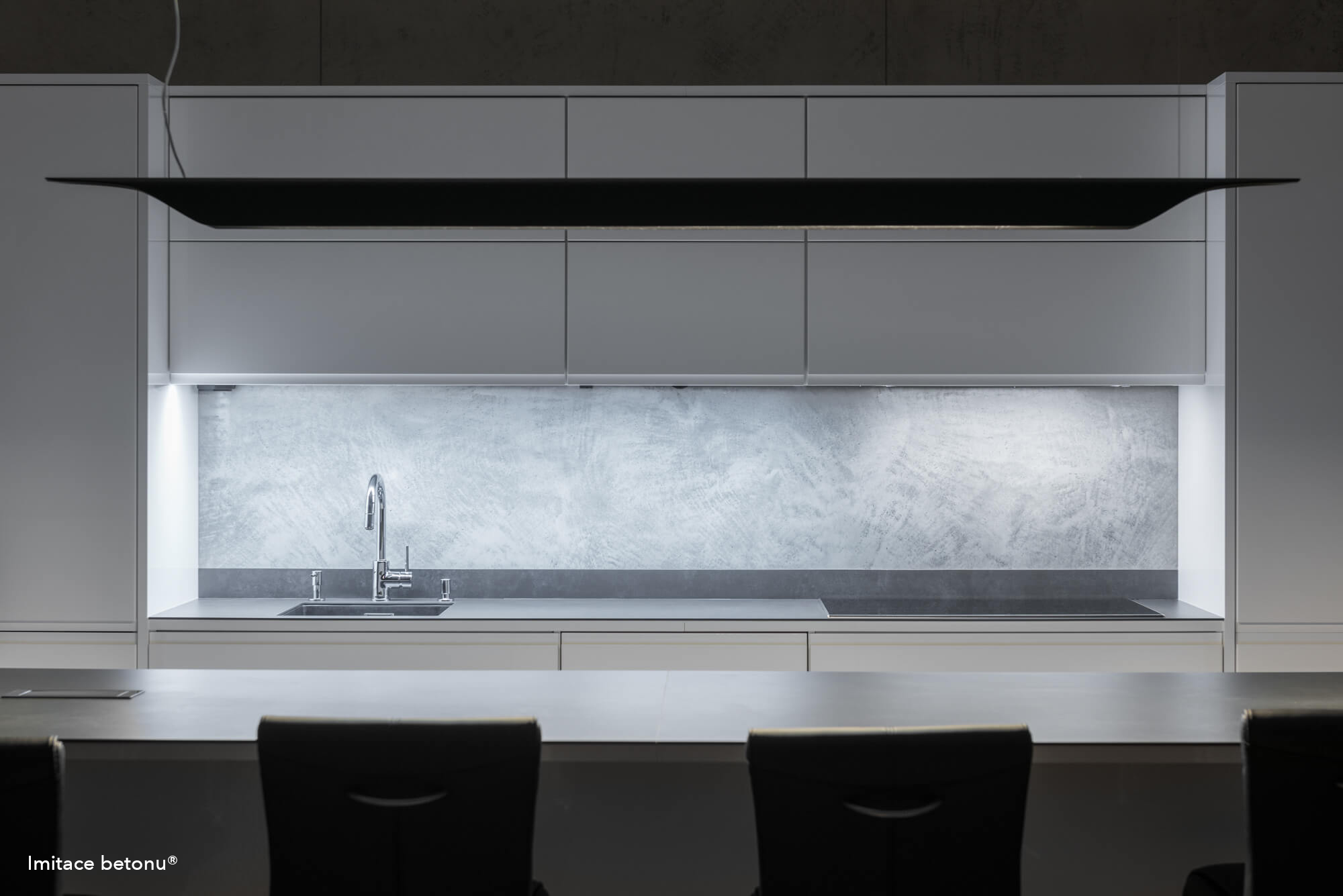
They came to me one day looking for a material that could replicate the look of concrete. Nothing like that existed at the time, soI started experimenting with lime plaster and different pigments. It looked good on a sample, but when applied over a larger area, it began to crack. Eventually, I found a solution using cement-based tile adhesive. We made a significant loss on the project, but it was also where we developed a material that proved extremely successful for us in the years that followed. Shortly afterwards, we had our own cement-based finish manufactured, which we still use today.
Imitace betonu® marked a shift towards innovation and the development of new solutions at Němec s.r.o. How do you approach innovation within the company?
My whole life has been shaped, to some extent, by chance and good fortune. I enjoy coming up with new ideas, and even more so bringing them to life. I would often wake up in the middle of the night with an idea and email it to myself so I wouldn’t forget it. I still have a folder on my computer called “Ideas”. There’s a lot in there. Not every idea worked out, but that’s part of the process.
Are your innovations inspired by specific requirements from clients, investors, architects and designers who come to you with a particular problem to solve?
That was certainly how Imitace betonu® came about. Betonepox®, on the other hand, was developed in response to growing demand for finishes suitable for bathrooms, where the cement-based Imitace betonu® had its limitations.
What makes Betonepox® different from other epoxy finishes on the market?
Above all, its appearance. There are similar finishes on the market today, of course. When something becomes popular, it’s only natural that competitors will try to copy it. The only way to respond is to keep improving and provide the best possible service.
What challenges did you have to overcome while developing Betonepox®?
The main challenge was finding a material that would behave the way we wanted it to while also being safe to use. We eventually succeeded, and today we use an epoxy that is certified even for direct contact with food.
Which projects featuring this finish stand out most for you?
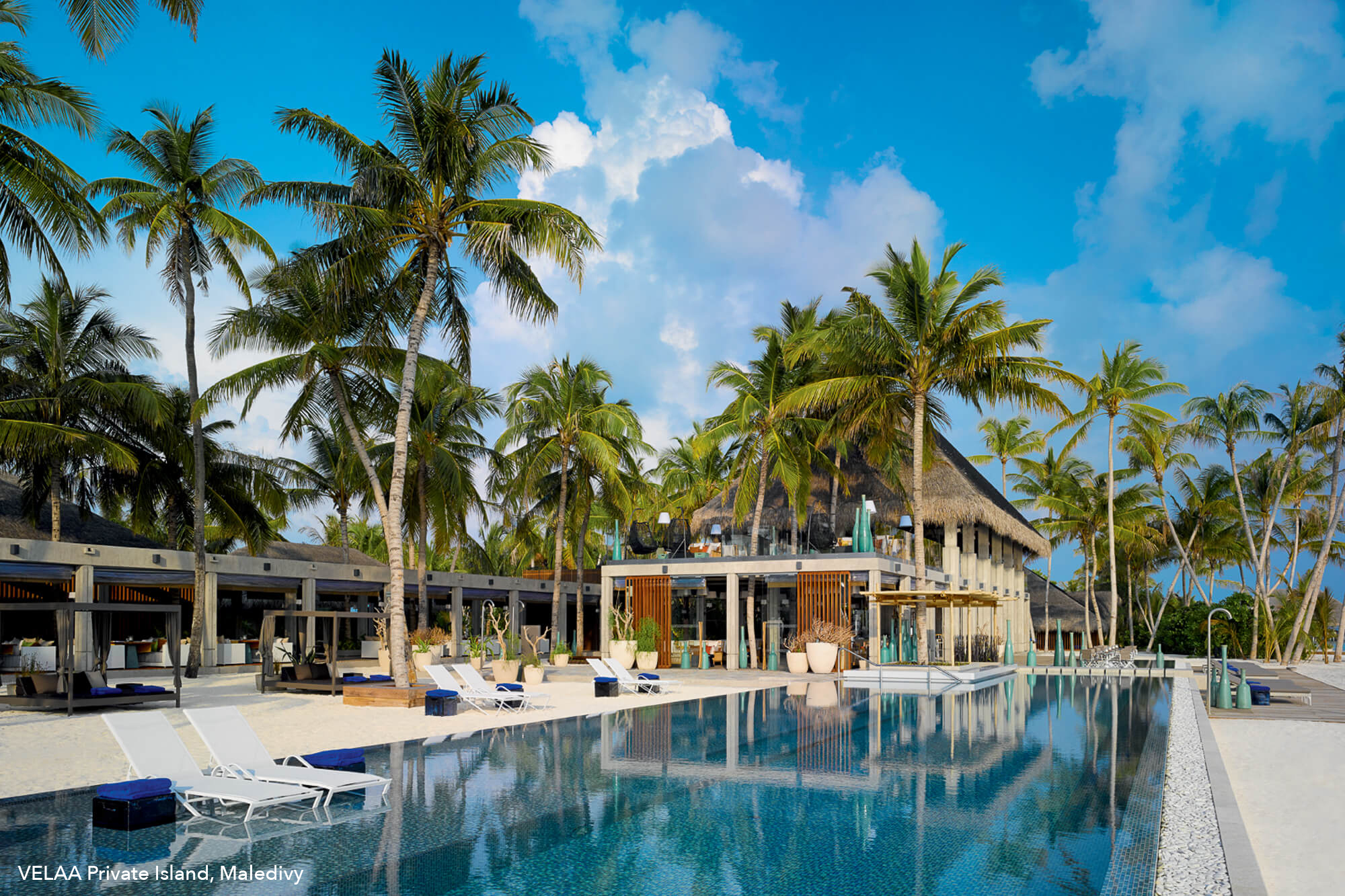
For me, the most interesting projects were Velaa Private Island in the Maldives and the restaurant on Saba Rock in theCaribbean. Petr Kolář from ADR was the architect behind both projects. In the Maldives, we applied more than 4,500 square metres of finishes, which was a major technical and logistical challenge. We have completed thousands of projects, but these two remain among my favourites.
How have your clients’ requirements changed over the past twenty years, and who makes up your main clientele today?
Interior design has changed considerably over the past twenty years, and we’re pleased that our finishes have been part of that evolution. Clients are much more demanding today and often come to us with very specific requirements. Thanks to our own technologies and many years of experience, however, we’re able to find solutions even for the most demanding projects.
We work with architects and designers as well as private clients. It’s roughly fifty-fifty. I admire architects and designers who really know how to work with materials and colours. I wouldn’t attempt to design an entire interior myself. Everyone should do what they do best.
Do you also collaborate with external organisations on development projects, and how much do you invest in research and development each year?
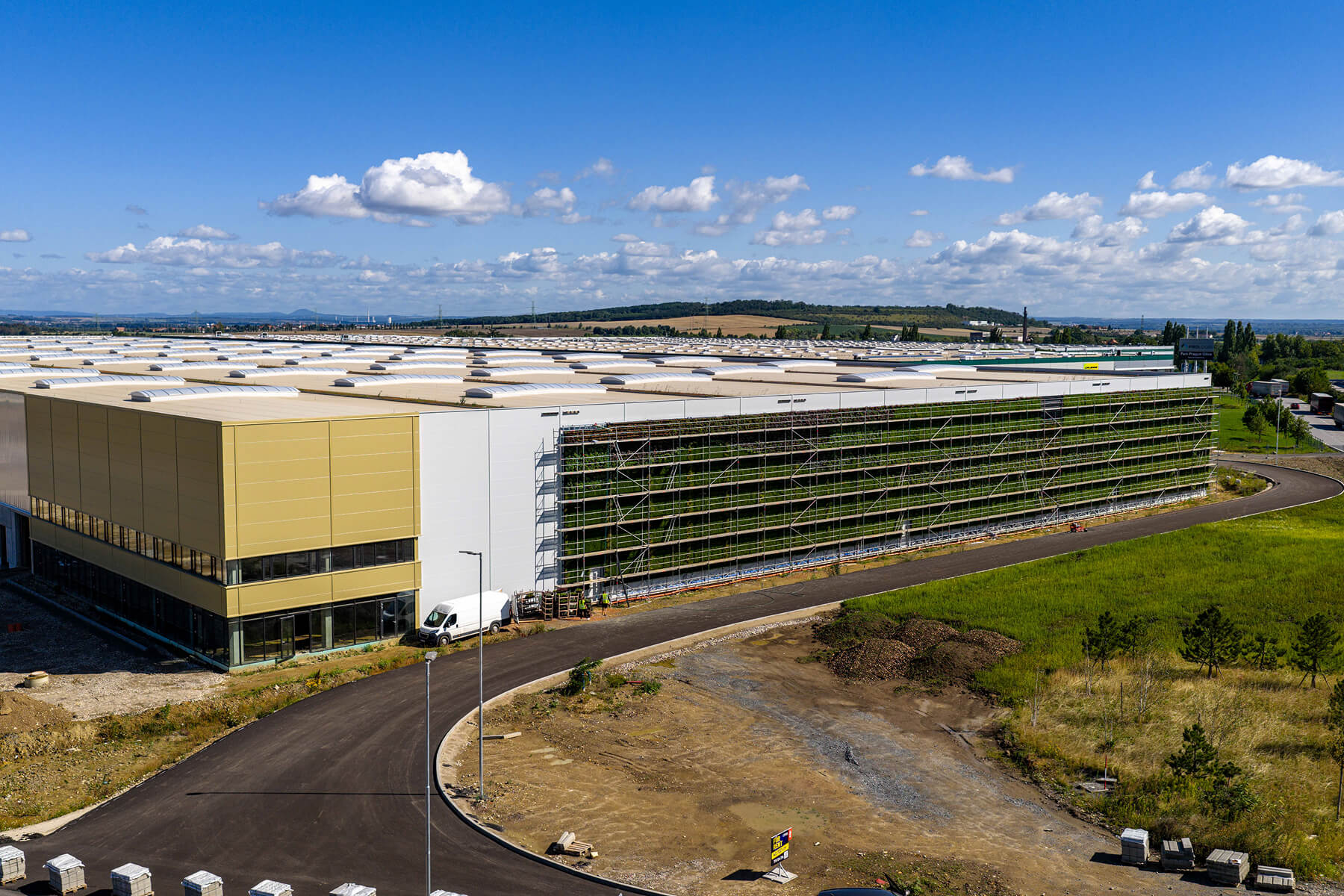
Initially, I worked on development myself, together with the guys from our installation teams. In recent years, we’ve mainly been working with the Czech University of Life Sciences Prague. We are currently working with the university and CTP to study how vertical gardens can help cool the surroundings of large industrial buildings.
I sometimes feel that I put most of my spare money into development, patents, trademarks and other intellectual property rights. Coming up with something new is one thing; protecting your unique position in the market is another.
You patented the Cascade Garden® vertical garden system thirteen years ago. What led you from decorative surfaces to plants?
An Italian company once approached me with an offer to represent them in the Czech Republic and install their vertical gardens. Unfortunately, we couldn’t agree on the terms. But I found the idea fascinating, so I started looking for inspiration. My wife and I travelled to Paris to see Patrick Blanc’s vertical gardens. They looked perfect in photographs, but the reality was often quite different. Eventually, we started creating our own vertical gardens. After several years, we realised that hydroponic systems had a number of shortcomings.
I started thinking about how we could overcome them, and that led to the development of Cascade Garden®. As with our finishes, we were initially the only company on the market offering this type of solution. Today, many companies offer vertical gardens, but thanks to our patented technology, we continue to hold a strong position in the market.
.jpg)
You receive funding for the research and development of green façades under the OP TAK programme, co-funded by the European Union. Would you have pursued this research without this financial support?
Definitely not. The project in Kozomín, for example, where we are testing the effect of a vertical garden on cooling the surroundings of warehouse buildings, involves costs running into tens of millions of Czech crowns.
Have you measured how a green façade affects the climate around a building, as well as the impact of an indoor vertical garden on the indoor environment?
On the façade in Kozomín, we measured a reduction in surface temperature of up to 15°C during the hot summer months thanks to the vertical garden. Plants protect themselves from heat by evaporating water, which in turn cools their surroundings.
Indoors, a vertical garden increases air humidity and improves acoustics. Greenery also has a significant effect on people’s psychological wellbeing, although this is much more difficult to quantify.

What are your plans for the future? What will come after Betonepox® and Cascade Garden®?
I try not to invent anything new anymore. Whenever I get an idea, my first thought is how much this bit of fun is going to cost me this time. But seriously, there was a time when I seemed to bethinking even in my sleep, but that has changed. I have different priorities now. I have a wonderful family, two hunting dogs and a great hobby of mine – my country house and hunting. I’ve invented enough already, and I still have a few things to finish.
You also entered the IT business when you made your Smart Work System business management software available to other companies. Was the idea from the beginning to develop the system, refine it within your own company and then bring it to market?
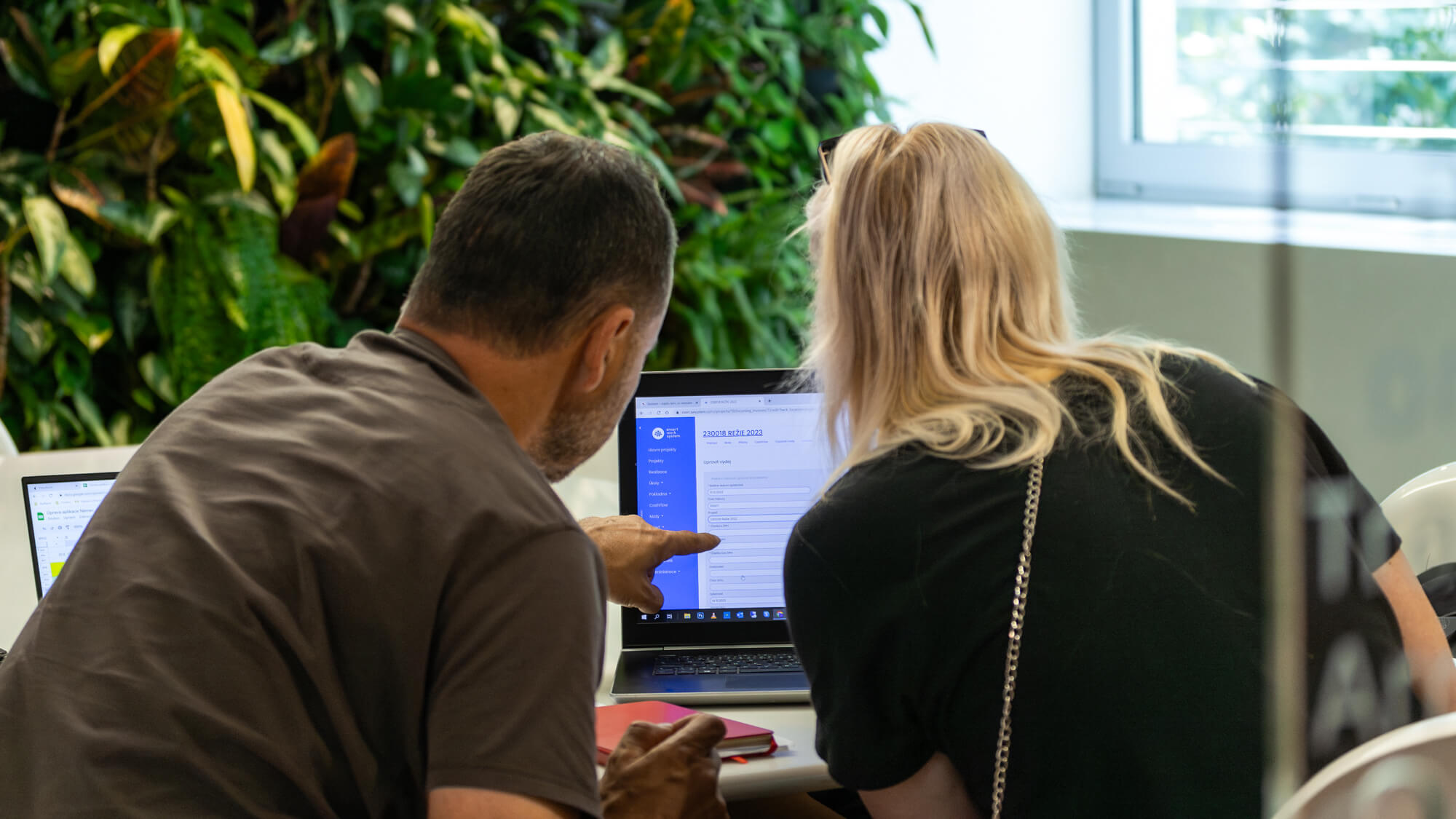
Originally, I was simply looking for software to manage our company. None of the available solutions suited our needs, so I wrote down our requirements and had a software company develop it for us. We expanded the system over several years, until I had the idea of adapting it for other companies with an annual turnover of around CZK 100–150 million. That wasn’t the original plan.
Are you continuing to develop it?
We are, and we’re also looking for new customers. We’re currently working on integrating artificial intelligence and connecting the software with other systems, particularly accounting software. I like to say that software has only two limits – imagination and money. We have to consider further development carefully to ensure the system remains easy to use.
But that isn’t the only software you’ve developed.
I also developed software for managing dog breeding, which is now used by our Bavarian Mountain Hound breeders’ club. It contains information on tens of thousands of dogs from across Europe and allows breeders to find suitable breeding pairs based on their coefficient of inbreeding.
These days, most of my time goes into developing software for the digitalisation of wildlife and hunting management. Yes, even hunting is going digital. Hunters will be able to keep the required records electronically, and communication with public authorities will become much simpler. That’s another project I’m working on at the moment.
Succession to the next generation is a major topic for family businesses. Are you already thinking about this transition and how to ensure the company will have someone to take over when the time comes?
I think every parent who owns a business would like to pass it on to their children one day. The company is celebrating its 30th anniversary this year, so succession is naturally becoming a topic. But I believe everyone should do what they enjoy. I don’t want my children to feel that they have to continue what I started.
The company should be run by someone who understands the business, enjoys the work and knows how to lead people. My youngest son, Josef, is studying IT. My younger daughter, Zuzana, has completely different interests. My eldest daughter, Kateřina, studied photography and has been working with us for several years. She is responsible for project photography and quality control, as well as marketing and social media. She also has experience in project management and successfully managed both our latest project in the Maldives and the one in the Caribbean.
But she now has an important new stage of life ahead of her, so there’s still time to think about all this. And I’m only 51 – I’m not planning to leave the company any time soon.
.jpg)
JOSEF NĚMEC
Josef Němec is an entrepreneur, visionary and founder of Němec s.r.o., a company that has specialised in decorative finishes and vertical gardens for 30years. He developed the Imitace betonu® and Betonepox® concrete-effect finishes and holds the patent for the Cascade Garden® vertical garden system. Alongside construction technologies, he is also involved in developing software solutions for business management and the digitalisation of game management.
The interview was originally published in ESTATE magazine in September 2026.
Text: Jan Stuchlík / Photography: Ondřej Pýcha