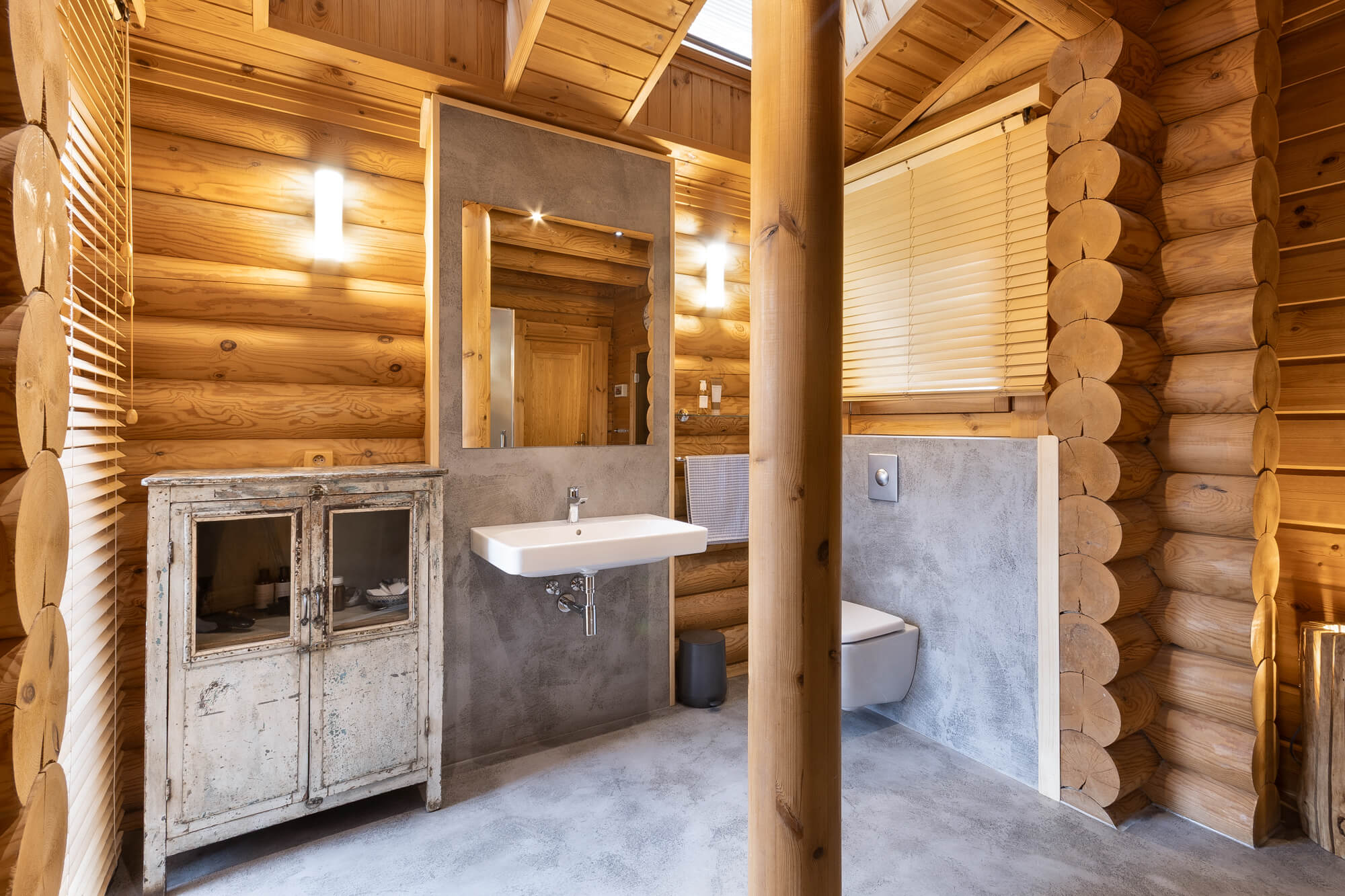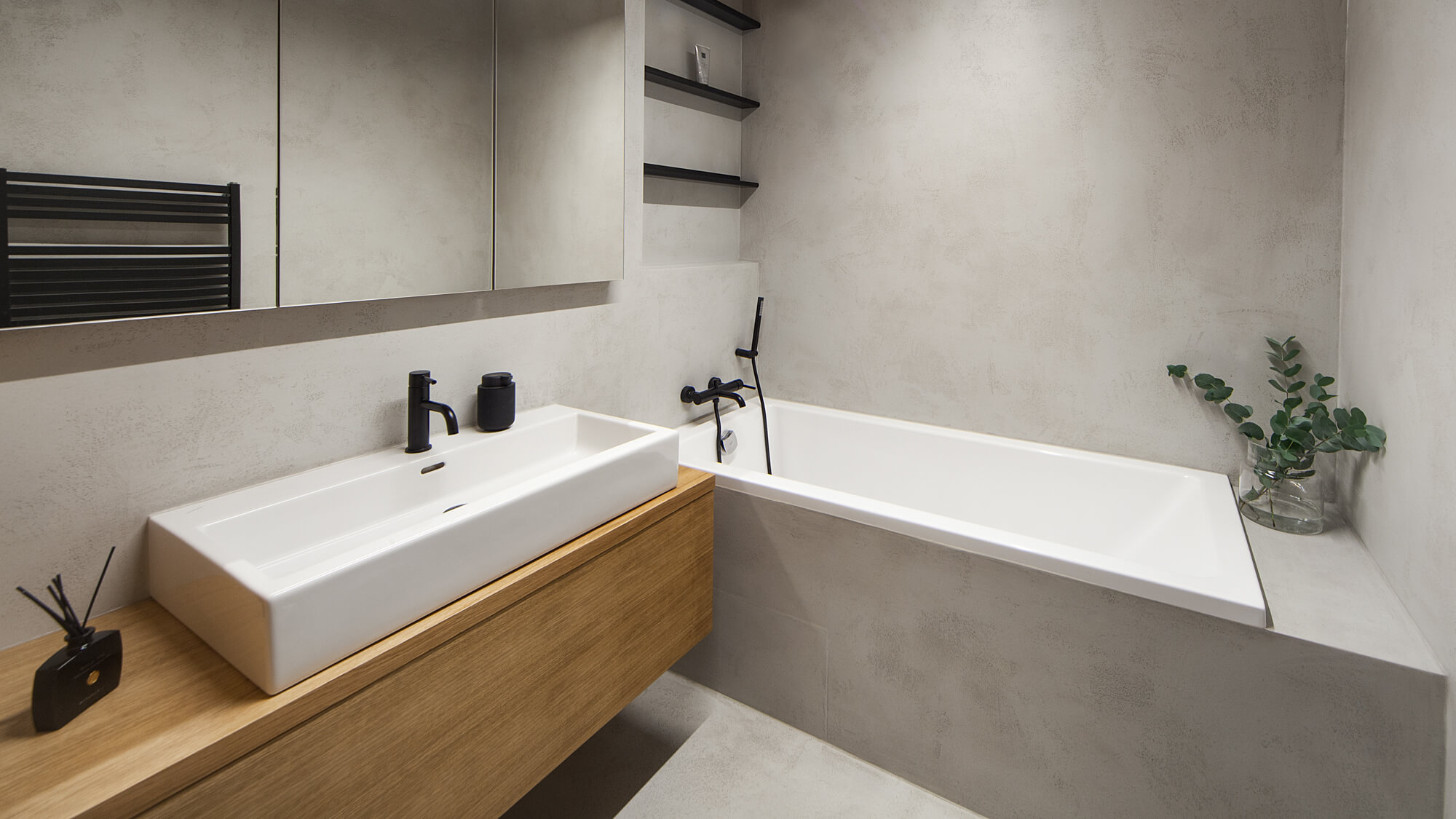
Concrete-effect finishes are among the most popular surfaces in modern interiors. But a similar concrete look can hide very different materials. The point is not which one is “better”, but which one belongs where. For bathrooms, showers and floors, one question matters most: is it the coating itself that withstands water and wear, or only the sealer on its surface?
Concrete-effect finish: similar appearance, different material
The term “concrete-effect finish” on its own says nothing about what the surface is made of. A concrete look can be achieved with a decorative cement-based coating as well as with an epoxy coating. When comparing microcement and epoxy coatings, it is therefore essential to distinguish their composition and how they are protected against water. The key difference is not the number of components, but what they contain: microcement contains cement, which is brittle and absorbent, while an epoxy coating is based on epoxy resin.
Classic microcement: the coating creates the look, the sealer provides the protection
Classic microcement is a decorative concrete-effect finish made of polymer-modified cement, for example with acrylic resin. It is applied in a thin layer, creates a surface with a natural mineral look and can look truly beautiful in an interior.
The technical data sheets of leading European manufacturers reveal one important thing: microcement is part of a multi-layer system. On floors and in areas exposed to water, such as bathrooms, its final sealing layer is a protective coat, most often a two-component polyurethane sealer. This is because the cement base of the coating is porous. Protection against water penetration, everyday wear, chemicals, dirt and scratches in classic microcement therefore comes mainly from this sealer. So the coating determines the look, and the sealer determines the protection.
Where microcement belongs and where it doesn’t
Microcement is not a poor-quality material; it simply needs to be used in the right place. It is a good choice, for example, on walls in living spaces where it is not exposed to water or heavier wear.
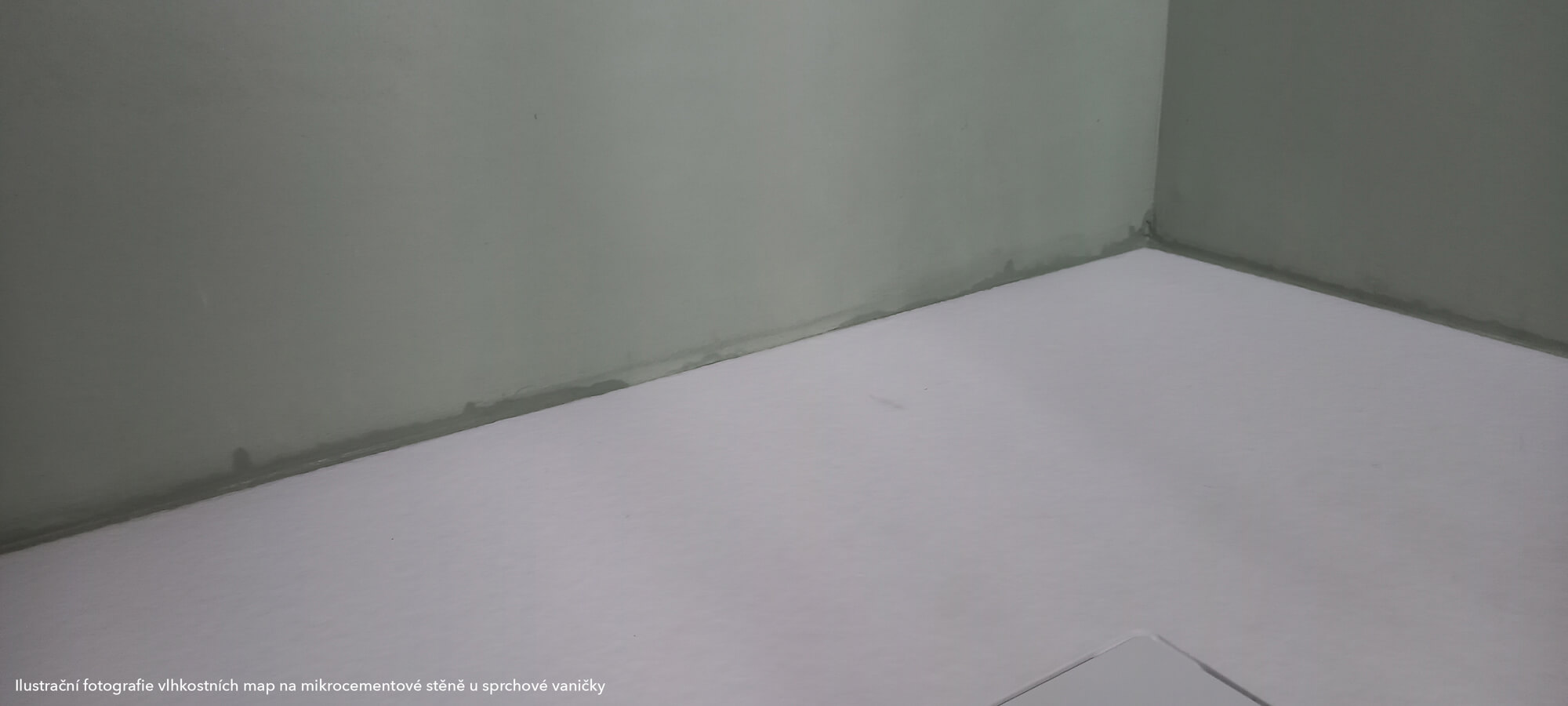
Bathrooms and floors are a different story. Here, protection against water relies mainly on a thin layer of sealer. If the sealer is damaged and water reaches the coating, it can soak in and cause dark patches, for example. Cement is also a brittle material that is prone to cracking. That is why we do not recommend classic microcement for bathrooms or floors.
Epoxy coating: water resistance built into the material
An epoxy coating is based on a two-component epoxy resin. Once cured, it forms a non-absorbent, water-resistant surface, so its water resistance does not depend on applying a protective sealer. Here the sealer mainly makes maintenance easier.
We at Němec s.r.o. developed our own Betonepox® epoxy polished plaster back in 2009. It has the look of concrete with the durability of epoxy. It allows walls and floors to be unified into a single surface with a minimum of joints, and shades can be chosen from RAL and NCS colour charts, so the result does not have to be a grey interior.
Based on 30 years of experience in the field, for bathrooms, showers and floors we therefore recommend only epoxy coatings among concrete-effect finishes.

Get inspired by our projects
What does Betonepox® epoxy polished plaster look like in a finished interior? Take a look at a minimalist bathroom in a family house in Lipence, a combination of concrete look and wood in a family house in Svatý Jan or floors and bathrooms in a family house in Moravany. These projects show how it is used and how well it pairs with other materials.
Don’t decide based on a photo alone
In a photo, microcement and an epoxy coating can look similar. But what determines how a bathroom or floor will look in ten years is the material the surface is made of. So when choosing, don’t just ask about price and appearance, but also about what actually protects the surface from water.
See the surfaces in person
Feel free to contact us for a no-obligation quote, or book a visit to our showroom in Prague or Brno, where we will be happy to help you choose the ideal surface for your project.